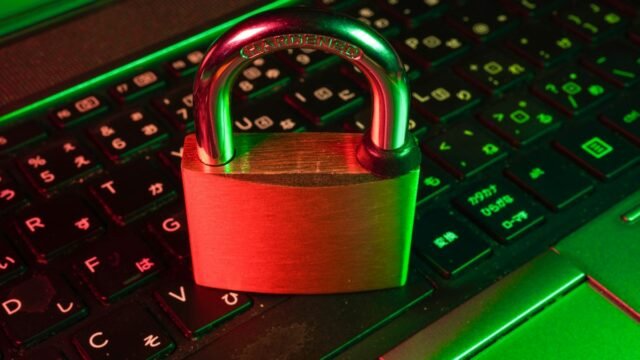
Security breaches occur on a daily basis across consumer websites, financial portals, and healthcare networks. Yet despite widespread publicity surrounding credential leaks, millions of internet users continue recycling identical or lightly modified passwords across dozens of personal accounts. A modern password routine eliminates this critical vulnerability by balancing mathematically impenetrable randomness with frictionless everyday usability.
Why Traditional Complexity Rules Have Failed
For over two decades, corporate IT policies enforced rigid password rules: mandatory periodic 90-day resets, minimum character counts, and the forced inclusion of uppercase letters, numbers, and special symbols. Real-world behavioral telemetry revealed that these constraints actually degraded security. Users forced into frequent resets simply incremented trailing digits (e.g., “Winter2025!” became “Spring2026!”) or jotted down plaintext credentials on sticky notes affixed to monitors.
Modern security authorities, including the National Institute of Standards and Technology (NIST), have officially repudiated mandatory periodic password expiration unless an active breach is confirmed. Instead, contemporary guidelines prioritize password length, uniqueness, and multi-factor authentication.
Passphrases vs Complex Words: The Mathematical Reality
Entropy—the measure of randomness and resistance to brute-force computation—scales exponentially with character length. A short, highly complex string like “P@$$w0rd” can be cracked by consumer GPU clusters running automated dictionary attacks in a fraction of a second. Conversely, a passphrase composed of four or five randomly chosen dictionary words (such as “correct-horse-battery-staple” or “timber-blanket-quantum-whisper”) creates an astronomical mathematical search space that would require thousands of years of continuous supercomputing power to brute-force.
Passphrases offer a dual advantage: they provide superior cryptographic resistance against offline dictionary attacks while remaining far easier for the human brain to remember accurately.
The Indispensable Role of Modern Password Managers
Human beings cannot realistically generate and memorize hundreds of unique, high-entropy passphrases. Attempting to do so invariably leads to password reuse, where a breach at an obscure niche forum exposes your primary banking or email credentials.
A reputable, audited password manager—such as Bitwarden, 1Password, or KeePassXC—acts as an encrypted cryptographic vault. You memorize a single, extraordinarily robust master passphrase, while the password manager automatically generates, saves, and auto-fills unique 20-character randomized strings for every service you interact with. Most modern managers also feature built-in breach scanners that proactively notify you when your credentials appear in compromised database dumps.
Phishing Resistance: Moving Toward Hardware Keys and Passkeys
Even the strongest randomized password remains susceptible to adversary-in-the-middle (AitM) phishing attacks, where a deceptive landing page intercepts your credentials and session tokens in real time.
To achieve complete phishing immunity, critical accounts (such as primary Google accounts, Apple IDs, and banking portals) should be transitioned to FIDO2 WebAuthn passkeys or hardware security keys (like YubiKeys). Passkeys utilize public-key cryptography bound strictly to the domain registered in your browser’s address bar, rendering credential theft mathematically impossible on fraudulent phishing domains.